

I’ll be honest—I was kinda taken with Lisbon. I’d heard mixed reviews about it in comparison to its larger metropolitan neighbors. And, of course, lots of people tack it onto a trip to Spain as a side note. But I really enjoyed it. There are so many interesting things to do in Lisbon, I could’ve spent an entire week there without ever getting bored. Hell, I could’ve road-tripped Portugal and been downright giddy. If you have the privilege of visiting this vibrant little city, check out my guide to the top 10 things to do there.
NOTE: THIS POST HAS BEEN SPONSORED AND/OR CONTAINS AFFILIATE LINKS THROUGH WHICH I EARN A COMMISSION AT NO ADDITIONAL COST TO YOU. SUPPORT A WOMAN-OWNED SMALL BUSINESS (LIKE MINE!) TODAY. (P.S. ALL VIEWS EXPRESSED ARE MY OWN. OF COURSE.)
TABLE OF CONTENTS > Click to open
Best Things to Do in Lisbon
Make the Hike Up To Castelo de São Jorge
This one’s kind of a given when visiting Lisbon. You can’t go anywhere in Lisbon without seeing São Jorge Castle perched on the city’s highest hilltop. And, yes, even though it’s a total tourist trap, it’s a tourist trap totally worth visiting. You’ll catch some of the best views of the city from the castle’s main terrace.


Much of the current castle only dates back to the 1930s, but the history of the fortress goes all the way back to the 12th century when the Moors recaptured Lisbon. It’s a fun castle to explore with lots of climbing around, so wear good walking shoes. And, for some reason unbeknownst to me, they have peacocks everywhere. Ones that don’t mind getting up in your personal space. But they’re harmless.


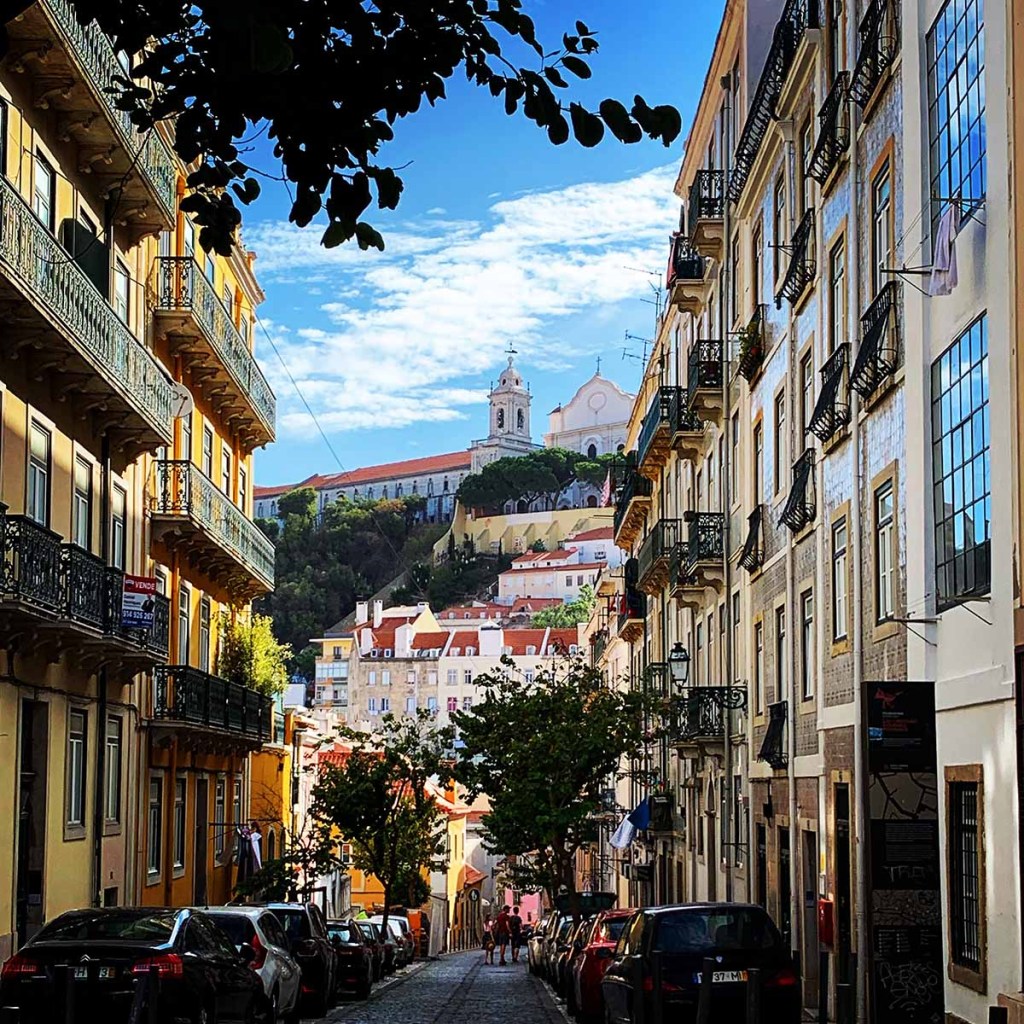

My main recommendation here is to make the hike up the hill. It’s steep, and not at all glamorous in the Portuguese heat, but the back streets and winding alleyways are just incredible. One thousand percent Insta-worthy. Which is partly why it’s on my list of top things to do in Lisbon. If you go first thing in the morning, you can beat some of the heat and get great shots of the sun filtering through the streets.
Have Lunch at Miradouro de Santa Luzia

After you’ve spent the morning hiking up to the castle and exploring, stop off at Miradouro de Santa Luzia garden terrace to have lunch. For those who are curious, “Miradouro” means “viewpoint” in Portuguese. Aside from the castle terrace, Santa Luzia is amongst the most well-known spots for great city views.
This spot is nestled right in the heart of Alfama district, Lisbon’s historic district, and overlooks the Tagus River. There’s a small church there, Santa Luzia (duh), decorated with the famed Portuguese tiles. And the area is chock full of cafes and restaurants and street vendors, if you fancy a wander. It’s a little crowded, but still warrants being on the “Things To Do in Lisbon” list.
Hop the Elevador da Glória & Admire Some Street Art in Lisbon

This is something we just “happened upon” in Lisbon that I wish I’d known about in advance. But I definitely recommend it for anyone visiting. After trekking the city’s punishing hills all day in the heat, an area suddenly opened up in front of us with tons and tons of street art. And a funicular. This is the Elevador da Glória in the Bairro Alto neighborhood. Now, you’ll see Portuguese street art all over Lisbon, Porto, and Madeira, but it is super concentrated here.
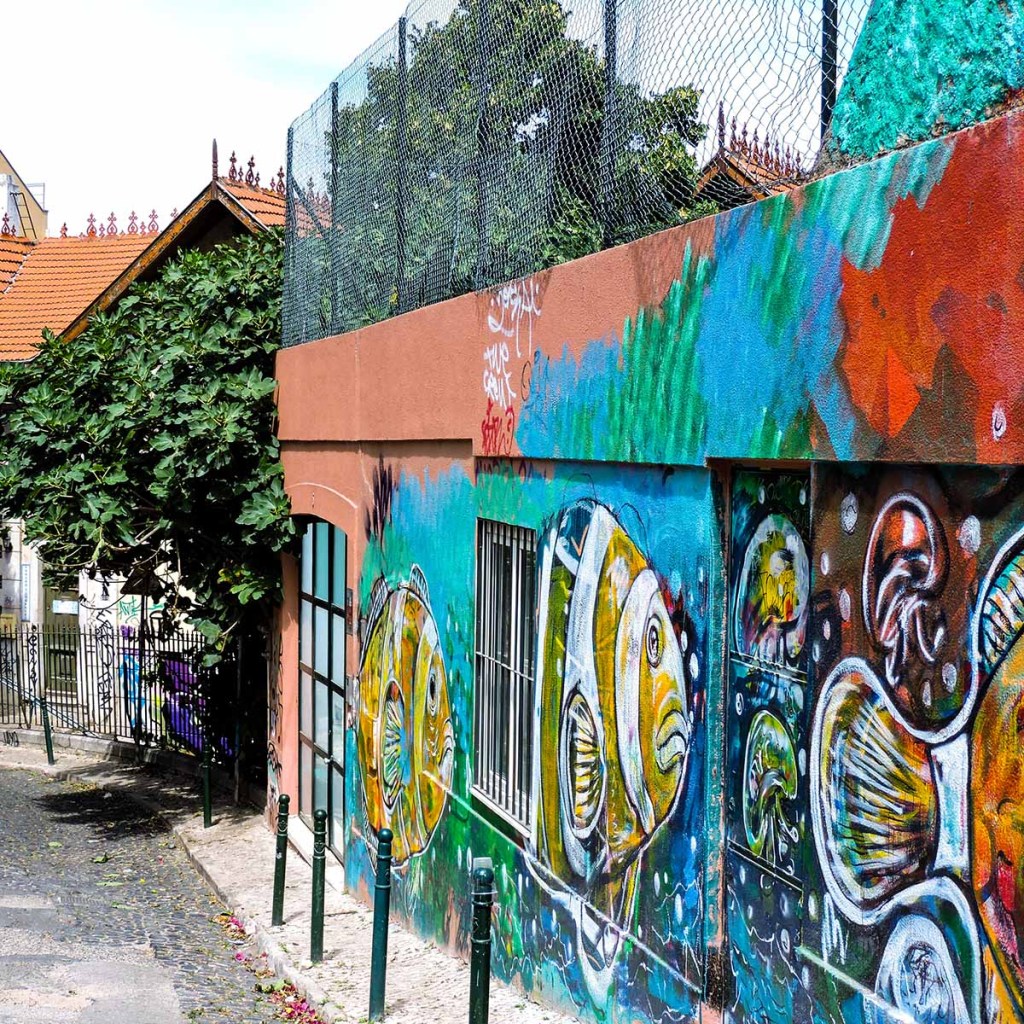
The funicular goes back and forth, up and down a steep ascent connecting the Bairro Alto district to the lower-elevated Baixa neighborhood. There’s a lot to see – for example, the graffitied tram at the corners of Rua San Pedro de Alcántara and Rua das Taipas (at the top) and Avenue da Liberdade across the street from the Hard Rock Cafe (at the bottom).
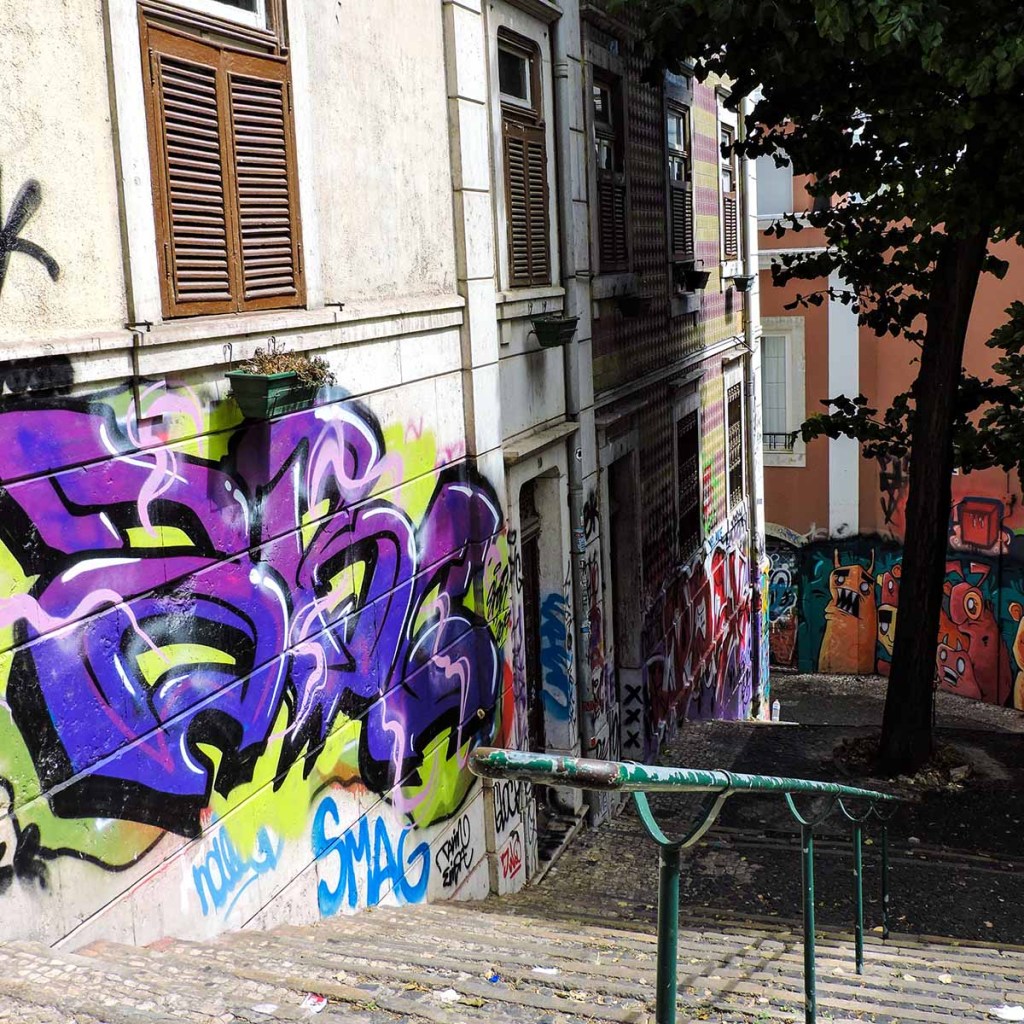
Now, the street art lines the funicular alleyway all the way down, but it also branches off onto a side street called Largo da Oliveirinha. It’s ever-changing, too, so whatever I’ve recently photographed has likely been updated already. This was a great stroll with no shortage of artwork to look at, making it one of my favorite things to do in Lisbon.
Get Debaucherous On Pink Street

Rua Nova do Carvalho, also known as Rua Cor de Rosa (“Pink Street“) was given its nickname because, well… the whole street is painted pink. The neighborhood there, Cais do Sodré, is Lisbon’s former Red Light District and has been given a major makeover in recent years. Now, it’s one of the hottest places to stay if you like a solid nightlife scene.
It’s pretty centrally located, close to the Mercado da Ribeira and Rua Augusta’s Arch on Praça do Comércio just off the water. If you’re looking for a big night out, this is definitely the place to be, and one of the big things to do in Lisbon.
Have Your Sins Forgiven at Mosteiro dos Jerónimos
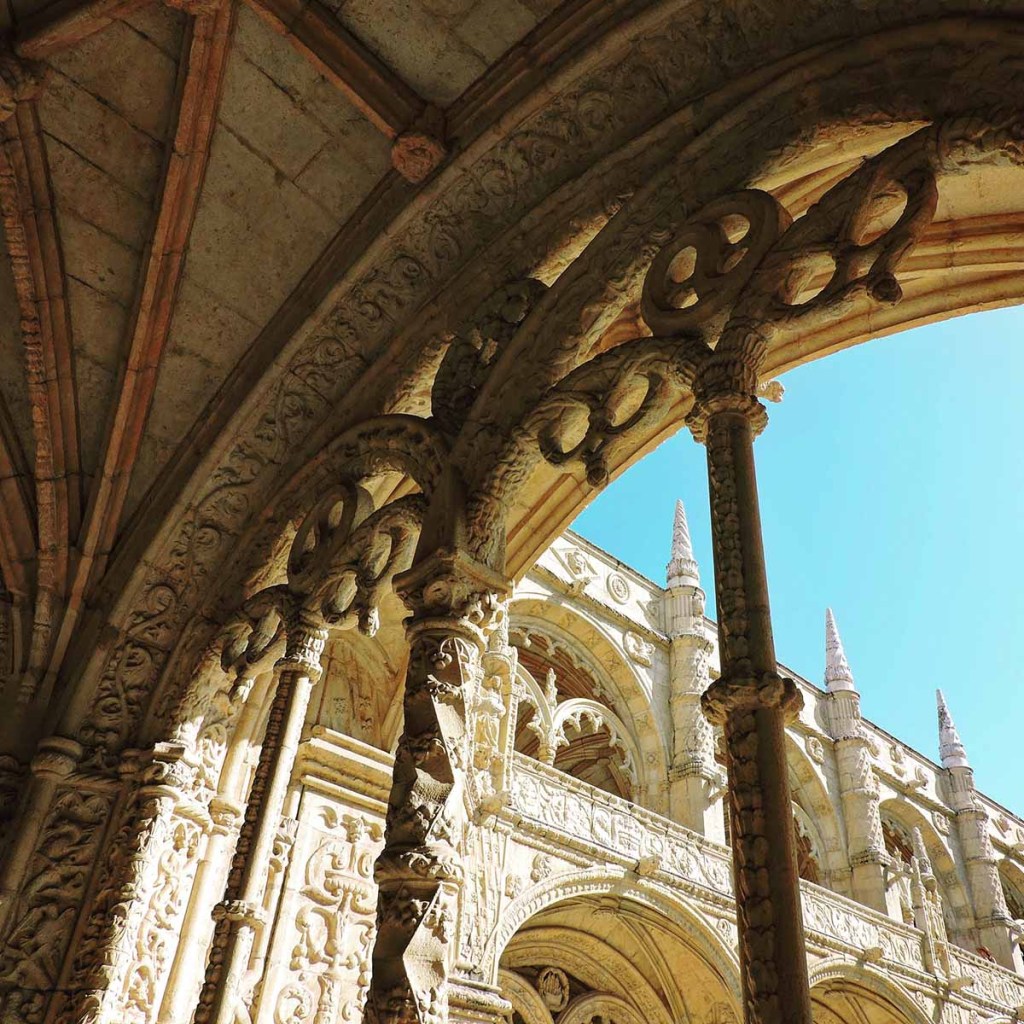
You’ve been out all night on Pink Street, so it’s only appropriate that you have all your sins forgiven at the Monastery of St. Jerome. Might I also suggest some coffee and pastéis de nata at Pastéis de Belém beforehand? Yes, it’s a two-fer. And I’ll explain.
Portugal has a seemingly endless number of monasteries, but none more famous than Lisbon’s Mosteiro dos Jerónimos. It’s a UNESCO World Heritage site and it’s incredible. It’s located in the Belém neighborhood, which is a little bit of an offshoot from the rest of downtown Lisbon.
You’ll want to arrange some sort of transportation there and back. (Uber is pretty clutch in Lisbon.) But, before you tour the monastery, stop by Pastéis de Belém.
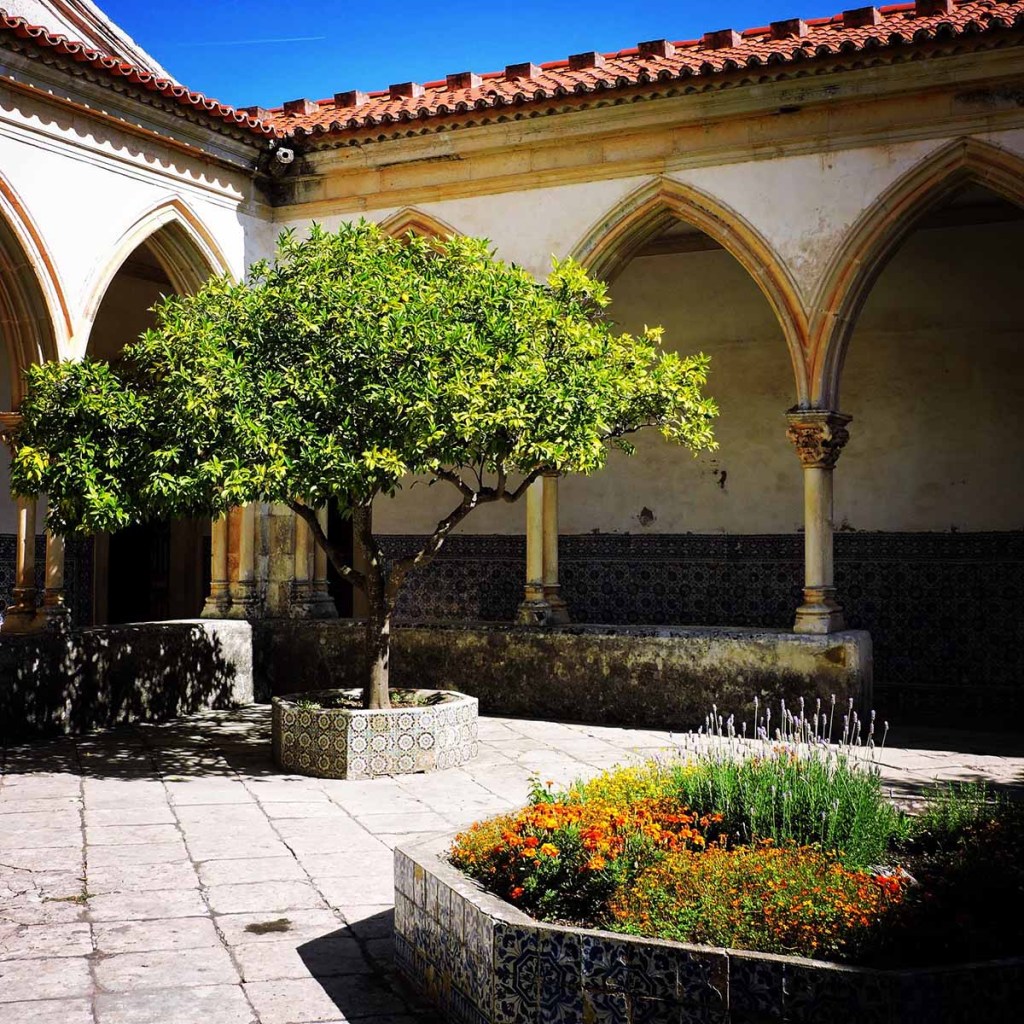
Pastéis de Belém is just across the street, and is home to Portugal’s most famous pastry, the pastéis de nata. It’s basically a small pastry filled with egg custard, typically served in pairs. Sprinkle cinnamon or powdered sugar (or both!) on top and enjoy. The bakers at Pastéis de Belém have been making them the same way the monks from Jerónimos did in the 1830s!

If you plan on experiencing all the joy that is pasteis de nata, I suggest getting to the cafe first thing in the morning. The line starts to wrap around the block. Same for the monastery. The beauty of the two is that the bakery opens an hour or two before the monastery.
So, get your coffee and pastry fix and then go appreciate some architectural beauty. (A helpful hint, too, that you can get your order to-go and sit in the park across the street if it’s super crowded already. Much shorter wait than for eating in.)
Jardim Botânico da Ajuda for One of the Most Relaxing Things to Do in Lisbon


In addition to monasteries, Lisbon also has a ton of gardens, and, of course, they’re all beautiful. But I particularly enjoyed Jardim Botânico da Ajuda. Probably because it was a smaller one, sort of buried in Belém. It was also the very first botanical garden in Lisbon, dating all the way back to the 1760s. It’s a short walk from the Jeronimos Monastery and only a small entry fee. We basically had the place to ourselves.
Inspire Yourself at Lx Factory & Village Underground

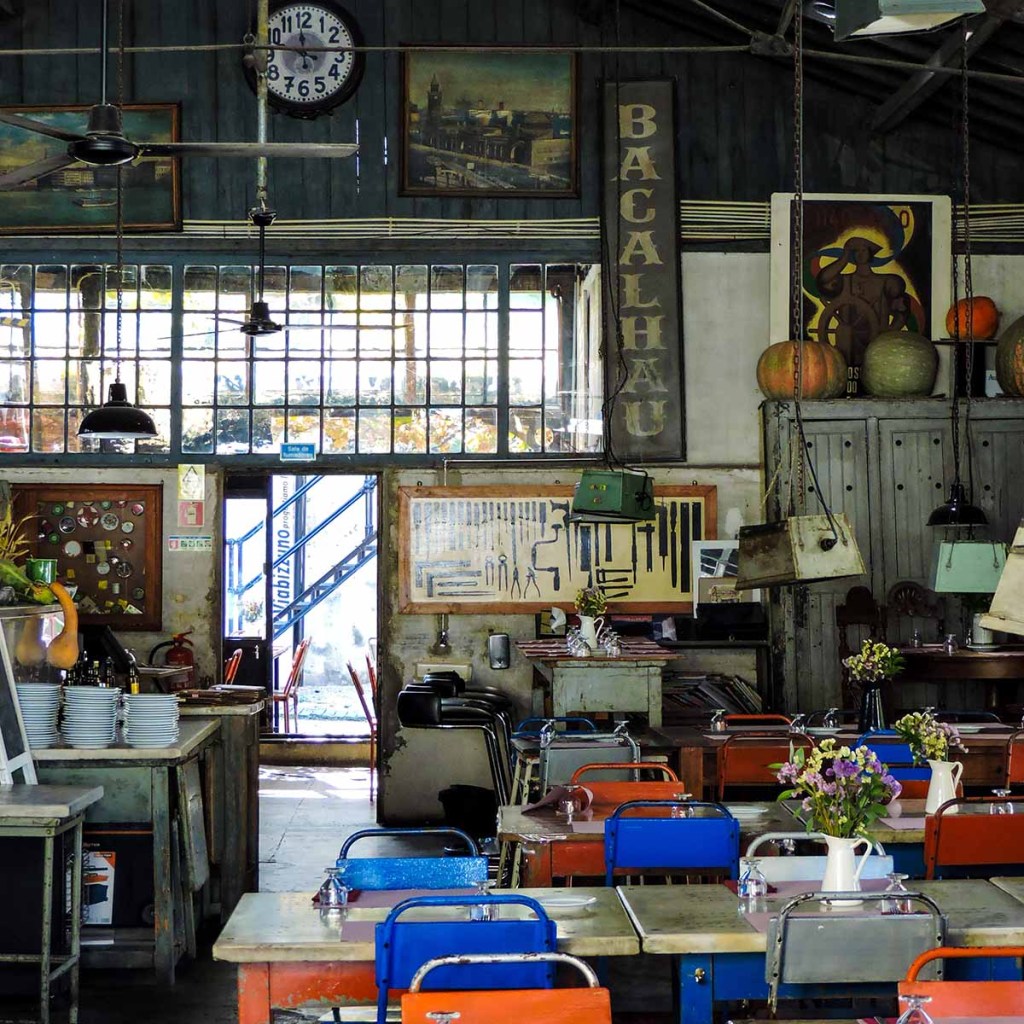


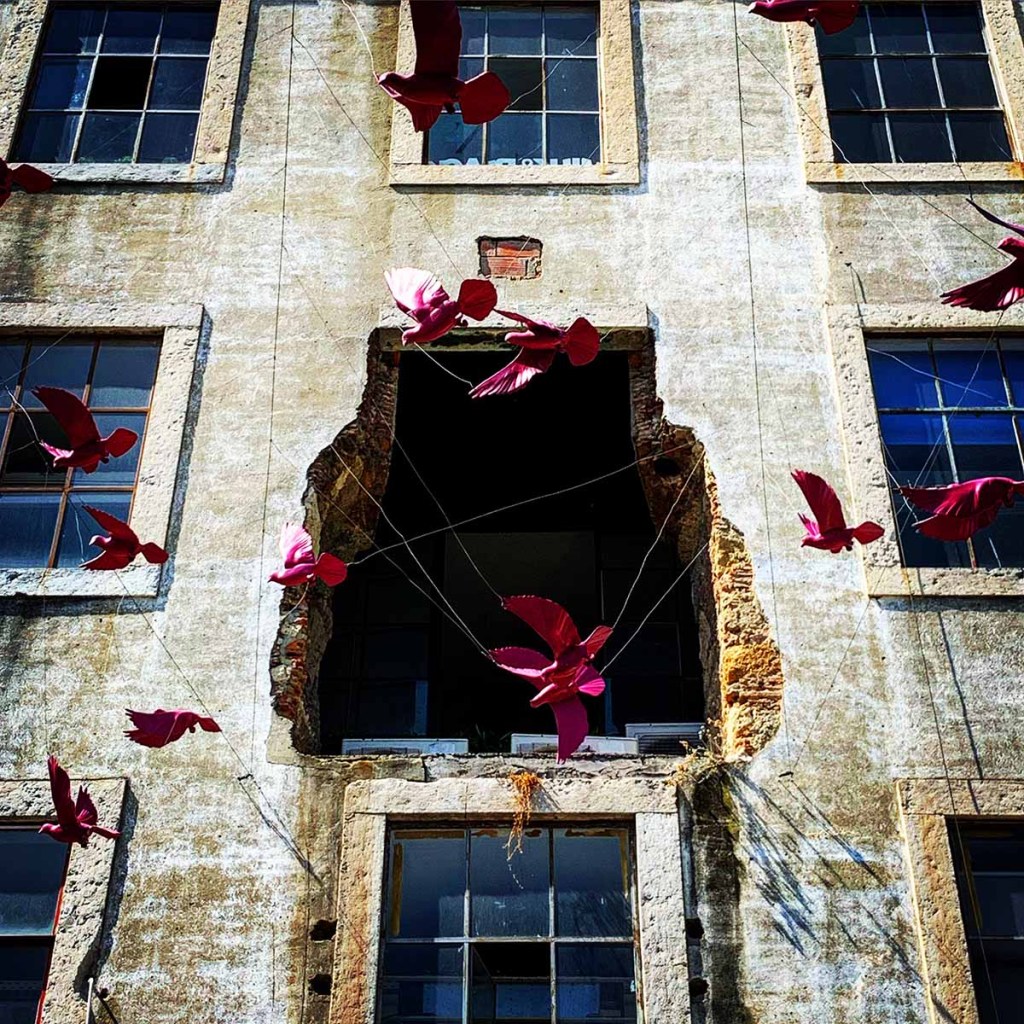
That’s right! It’s another combo, and two more awesome things to do in Lisbon. Also out in Belém. And right next to one another. The Lx Factory is a former textile-turned-food-processing-warehouse under the Ponte 25 that’s been transformed into a killer arts district. (Because of course it’s an arts district under a bridge, right? Aren’t they all?) Artsy craft shops, restaurants, small businesses, you name it… it’s all there.

And—while it looks like the Village Underground is attached to the Lx Factory—it’s not. You have to enter it from the main road running along the river, the Avenue da Índia. All the way around the block from the Lx Factory entrance. Another arts community, the Village Underground is a conglomeration of painted shipping containers and buses, all stacked on top of one another. Poetry and street art adorn the fence. A great spot for a walk-through and some fun eye-candy.
Devour Amazing Food at Time Out Market in Lisbon, Portugal

And I mean devour. I wouldn’t claim to be much of a foodie, but the Time Out Market may have also been one of my all-time favorite things to do in Lisbon. Simply amazing.
So, what is a Time Out Market? For those of you that don’t know (and I didn’t), it’s basically a food marketplace funded by Time Out Magazine. There are only a few of these marketplaces throughout the world, and Lisbon is home to one of them. It takes the best of the best of everything in the city, and houses them all in one big warehouse—the best steak, the best sushi, the best beers, food vendors, etc. Literally the top chefs in Lisbon, including Michelin-starred chefs, serving food at small booths. A delectable experience for ridiculously inexpensive costs.
The Time Out Market is in Cais do Sodré, so eat here before heading out to Pink Street for the evening. It’s right around the corner. Or, stop off on the way back from Belém and grab a bite. Just don’t pass up the opportunity!
Need More Things to Do? Catch a Sunset at Hotel Mundial’s Rooftop Bar

Funny story here. We were staying at the Hotel Mundial and didn’t realize until partway through our visit that its rooftop bar is known for being one of the better rooftop bars in the city. The hotel itself is just mid-range, but the rooftop is excellent. It’s located pretty much right in the middle of Alfama, Bairro Alto, and the water, so you can see everything. A note that they don’t serve meals there, only snacks. Just another reason to hit up Time Out.
Piece Together History at the National Tile Museum

I have to disclose up front that I did not go to the Museu Nacional do Azulejo, or the National Tile Museum, myself. However, anyone and everyone we spoke to said it was one of the best museums they’d ever been to. So, I’m adding it to the list of things to do in Lisbon… for you. And, if I ever go back, I’ll definitely be doing this.
I know, I know—a tile museum? But you have to understand the significance and history of tile in Portugal. They’re everywhere, all over the country, they decorate everything in the cities, and they tell all the stories of Portugal’s long history. They’re a huge part of the Portuguese culture. And I hear the museum displays some of the most intricate tile work you’ve ever seen.
More Things To Do In Lisbon?
If you’re looking for an authentic city getaway with some real flavor, Lisbon is the place to be. This little city is packed to the brim with history, art, food, and wine. And it’s a really inexpensive country to travel in.
No way should Lisbon be just a side note to a Spain vacation; it’s a whole experience unto itself.
Want to add your top sights in Lisbon? Drop them in the comments section or shoot me an email via my Contact page.
PIN THIS FOR LATER…