
The Azores are unforgettable—mountain peaks meet the Atlantic, and every island has its own charm (and incredible local wine). But figuring out how to travel between Azores islands isn’t always straightforward. After hopping around myself, here’s what I learned about the best ways to travel the Azores.
NOTE: THIS POST HAS BEEN SPONSORED AND/OR CONTAINS AFFILIATE LINKS THROUGH WHICH I EARN A COMMISSION AT NO ADDITIONAL COST TO YOU. SUPPORT A WOMAN-OWNED SMALL BUSINESS (LIKE MINE!) TODAY. (P.S. ALL VIEWS EXPRESSED ARE MY OWN. OF COURSE.)
A Quick Look at the Azores Archipelago
The Azores archipelago is in the middle of the Atlantic Ocean and is made up of nine islands split into three groups: Eastern, Central, and Western.
- Eastern Group: São Miguel and Santa Maria
- Central Group: Terceira, Graciosa, São Jorge, Pico, and Faial
- Western Group: Flores and Corvo
Each group has its own character. São Miguel is the largest, most developed and most visited; the central islands are great for island-hopping by ferry; and the western pair are the most remote and rugged.
Flying to the Azores from Abroad
First up, getting TO the Azores.
Most international flights land on São Miguel at João Paulo II Airport (better known as Ponta Delgada), but three other islands—Terceira, Pico, and Faial—also get a few international flights.
Here’s a quick overview of direct flights by country:
| Island | Direct Flights From Portugal | Direct Flights From US | Direct Flights From Canada | Direct Flights From Cape Verde + Europe* |
| São Miguel | ✔ | ✔ | ✔ | ✔ |
| Terceira | ✔ | ✔ | ✔ | |
| Pico | ✔ | |||
| Faial | ✔ |
*European countries include: Czechia, France, Germany, Netherlands, Spain, Switzerland, and the UK
Note: The table above only includes direct flights. There are probably loads more places you can fly to the Azores from; they would just have a layover in one of the countries listed above.
Even if you’re coming from a country with access to direct flights, those flights could only be offered once a week during the low season. Keep this mind when scheduling your Azores trip!
But again, that’s only direct flights. There are regular flights to and from Portugal, the US, and Canada, so you can always route through there. Personally, when I went to the Azores, I combined it with a trip to Portugal. It gave me another beautiful place to explore and helped to break up the long Atlantic flight.
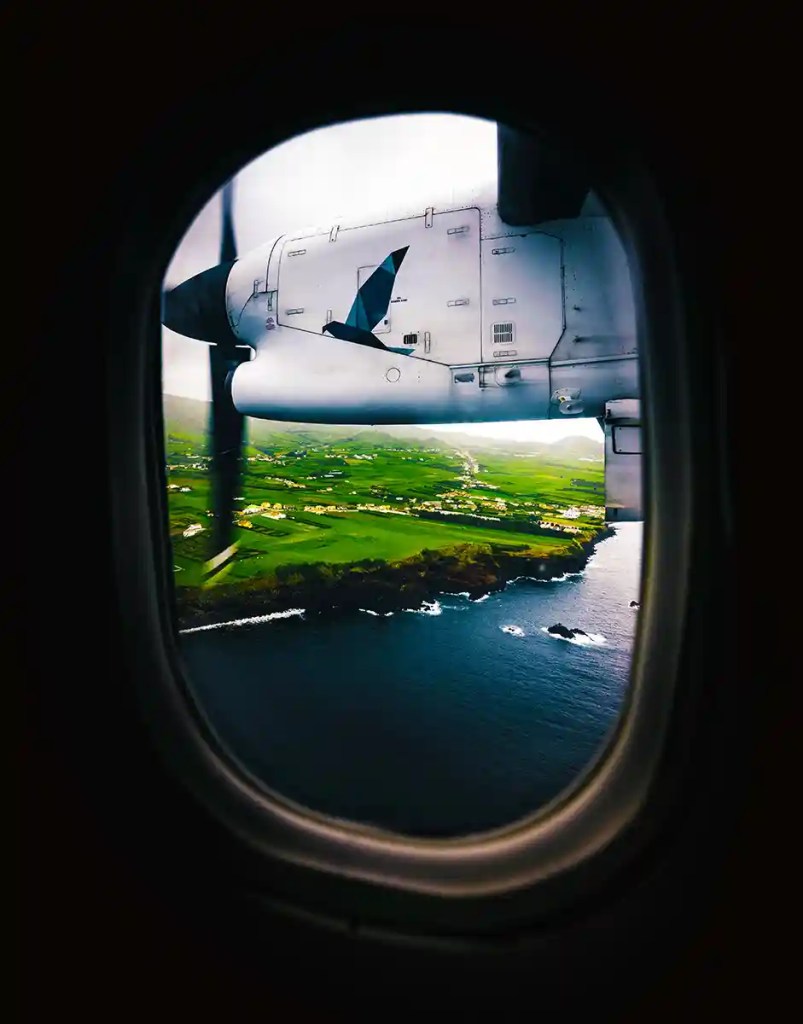
PHOTO CREDIT: DEPOSITPHOTOS.COM
PLANNING A TRIP TO THE AZORES SOON?
Below are some of the best tours, hotels, and more to kickstart your plans!
Popular Tours & Activities in the Azores
- Small Group Food Tour in Ponta Delgada
- Wine Tasting and Tour on Pico Island
- Volcanic Tour of São Miguel Including Dinner and Thermal Baths
Top Places to Stay in the Azores:
You Might Also Like These Global Debauchery Posts:
How to Travel Between Azores Islands
Whether you’re flying, taking a ferry, or renting a car once you arrive, this quick overview compares the main ways to travel between the Azores Islands—so you can decide which option fits best for your route and budget. Then find more information below!
| Option | Best For | Cost | Travel Time | Notes |
|---|---|---|---|---|
| Air | Inter-island | $$-$$$ | 30 min – 2 hrs | Seasonal; some islands only accessible from certain islands |
| Ferry | Central/west groups | $-$$ | 25 min – 3.5 hrs | Rent a car; scenic but weather-dependent |
| Car Rental | Central/west groups | $$-$$$ | n/a | Travel at your own pace; avoid multiple car rentals – shuttle car on ferries |
Flights Between the Azores Islands
When trying to figure out the Azores and how to travel between islands, you’ll find air travel is often the quickest (and sometimes only) way to go.
When traveling within the central or western groups, you’re honestly much better off sticking to ferries. But if you want to travel between island groups—say, from São Miguel to Pico or Faial to Flores, or even in the eastern group from São Miguel to Santa Maria—air is your only option.
There used to be ferry lines connecting the island groups, but they haven’t been around since 2022. Those long-distance ferries have been entirely replaced by SATA Azores Airlines’ inter-island flights.
These flights can be as short as 30 minutes or as long as 2 hours and can get pretty pricey, typically running between US$66 to US$112 one way. There are also a few things to consider when island hopping:
- Santa Maria – Only connects by air to São Miguel.
- São Jorge – Flights go only to Terceira; use ferries for Pico connections.
- Graciosa – Only has direct flights to Terceira, but only has ferry service in the summer.
- Corvo – Only connects to Flores, both by air and sea
- Seasonality – Flight frequency drops significantly in winter.
- Luggage Tip – SATA allows one free checked bag on inter-island flights.
- Delays – Weather-related cancellations are common; plan flexible connections.

PHOTO CREDIT: DEPOSITPHOTOS.COM
Azores Ferry Schedules and Routes
While air travel is the fastest, sea travel is MUCH cheaper. A ride between Faial and Pico can cost as little as 4€ (roughly US$4). Even longer trips, such as between Graciosa and Terceira still typically cost under 30€ (US$32) per person.
Another highlight is not having to deal with the hassle of airport security. The process of getting through the airport can add on a good half hour or more to your travel, and taking the ferry is a nice way to skip all that. Ferries are also handy if you’re renting a car since you can board the car with you. Hashtag #big ol’ travel hack so you don’t have to rent a new car on every single island!
The only drawback is that ferry travel is a lot slower than air. The shortest possible trip is 25 minutes, but you should expect 1-4 hours for most. To be honest, I see this as a minor flaw. Most people don’t go on boats as an everyday thing, so getting to ride the ferry between islands adds a nice dash of adventure. Add on top of that the beautiful ocean views and free Wi-Fi, and it paints an irresistible picture.
Ferries are ideal for travel between islands within the central group and also between Flores and Corvo in the western group.

PHOTO CREDIT: Jules Verne Times Two, CC BY-SA 4.0
The One Ferry Company in Azores
Like I said before, Azores only has one ferry company, and that’s Atlântico Line. Luckily, the web is chock full of glowing reviews for them, so you can rest assured you’re in good hands. As an added bonus, them being the only one running ferries makes looking up schedules and booking tickets a Hell of a lot easier.
They have six different routes running between the islands, but only three that run year-round. Keep this in mind when planning your island-hopping.
YEAR-ROUND ROUTES:
- Linha Azul (Blue Line): Faial-Pico
- Linda Verde (Green Line): Faial-Pico-São Jorge
- Linha Rosa (Pink Line): Flores-Corvo
SEASONAL ROUTES (June through September or early October):
- Linha Lilás (Purple Line): Faial-Pico-São Jorge-Terceira
- Linha Branca (White Line): Faial-Pico-São Jorge-Terceira-Graciosa
- Linha Laranja (Orange Line): Pico-São Jorge
Note: Ferries can occasionally be canceled due to bad weather, but the operator promptly notifies passengers of any changes. If it’s raining, it’s best to have a plan B so you aren’t shuffling things around last minute!

PHOTO CREDIT: Ian Boyle, CC BY-SA 4.0
Getting Around Each Island: Public Transport and Car Rentals
Now that we’ve gone over how to travel between islands, let’s talk about transportation on each island.
The thing about the Azores is that public transportation is NOT designed for tourists – it’s more for the locals. Yeah, buses exist, but you can’t rely on them to be timely. Or even show up, in some cases.
I recommend checking out my detailed guide on renting a car if taking a taxi everywhere is out of your budget. While I think it’s the best option, there are a lot of things to think about before making that decision.
Island-Specific Tips
Of all the islands, São Miguel and Santa Maria have the best public transportation, but it’s still not the most reliable. If you want to take a gamble, you should be able to navigate these two without a rental car.
Buses are very limited in Flores and the central island group. A taxi or rental is a must-have to get to quite a few sightseeing spots.
Corvo is one place you don’t have to worry about rentals or buses because it is an itsy-bitsy, teeny-weeny dot in the ocean. All you need on Corvo is a good pair of walking shoes.

PHOTO CREDIT: Anna Jewels, Unsplash
FAQs and Things to Consider
All that being said, there are some important questions to go over.
A: Now, everybody’s answer is going to be different, but I absolutely loved São Miguel. This island is drop-dead gorgeous, both in terms of natural sights and architecture—it really has something for everyone. On the other hand, if you like hiking and high-up views, Pico can’t be beat; it has the tallest mountain in the Azores. Terceira has a rich history, and its capital was named a World Heritage Site.
A: There are a few different routes that work very well, so you can play around and see what works best for you. Here are a couple that should work well at the time of publishing:
During summer: Fly into São Miguel – fly to Santa Maria – connecting flight to Terceira – White Line ferry to Graciosa – White Line to São Jorge – any ferry to Pico – ferry to Faial – fly to Flores – ferry to Corvo – ferry back to Flores – fly to São Miguel – return home
Outside of summer: Fly into São Miguel – fly to Santa Maria – connecting flight to Terceira – fly to Graciosa – connecting flight to São Jorge – Green Line ferry to Pico – ferry to Faial – fly to Flores – ferry to Corvo – ferry back to Flores – fly to São Miguel – return home
A: For most travel options, I’d recommend planning your trip between mid-June and mid-September so you can take advantage of the seasonal ferry lines. Check Atlantico’s website for the exact dates, as they might change year by year. Trust me: it will make the problem of the Azores and how to travel between islands a much easier equation to solve.
Basically, the Azores Islands have something for everyone. I highly recommend taking the chance to visit—you won’t regret it!
Wrapping Up Your Azores Island-Hopping Adventure
Traveling between the Azores Islands takes a little planning, but every leg of the journey is part of the adventure. Whether you’re catching a quick ferry across turquoise water or flying above volcanic peaks, the trip itself is as unforgettable as the destination.
Once you’ve figured out how to get around, dive deeper into what makes these islands so special—check out the best things to do in the Azores for outdoor adventures, explore the most beautiful beaches in the Azores for a day of swimming and relaxation, or use a São Miguel itinerary to plan your time on the largest island.
Every island offers its own rhythm, so give yourself time to explore and let the Azores reveal their magic one by one.